
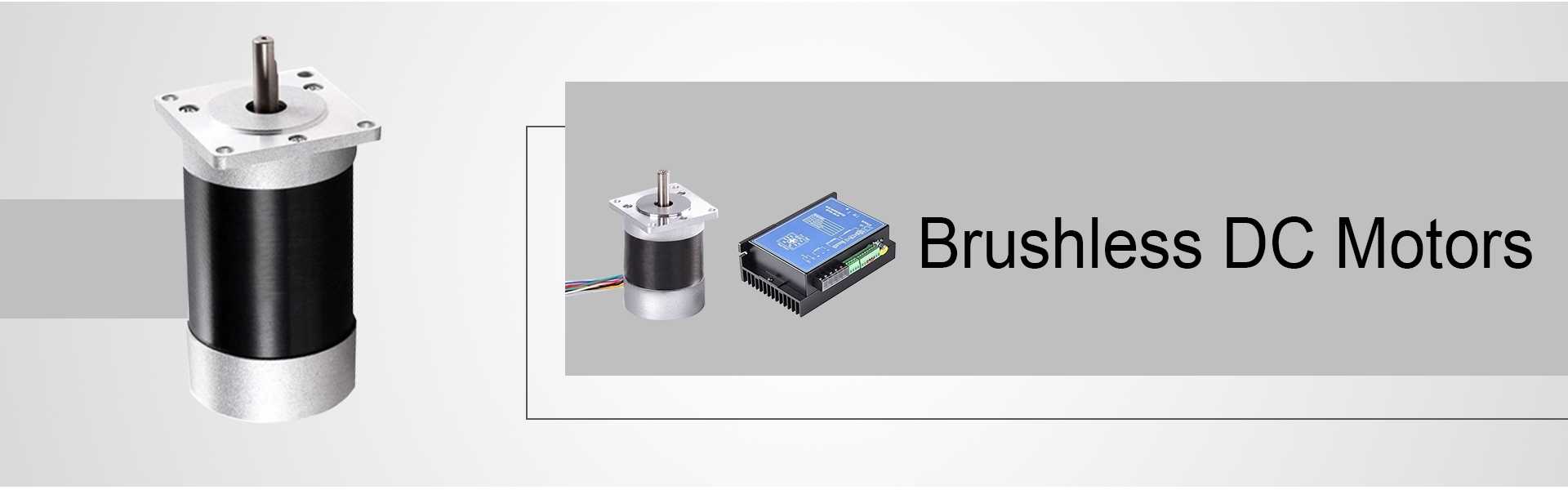

A brushless DC motor does not operate by itself. The controller plays a central role in determining how electrical energy reaches the motor windings and how the motor responds to changes in demand. This is one of the most important differences between a BLDC system and a traditional brushed motor. Electronic commutation replaces the mechanical switching action of brushes, making the controller an essential part of the drive system rather than an optional accessory.
Sensored and sensorless designs illustrate how control requirements can change the motor configuration. A sensored BLDC motor can use Hall sensors to provide information about rotor position, which can be useful when reliable starting and controlled low-speed movement are required. Sensorless control estimates rotor position from electrical behavior and can simplify the motor's physical construction. Neither approach is automatically superior because the best choice depends on how the equipment needs to start, accelerate, and operate.
The controller also has to handle the electrical demands of the motor. Voltage and current ratings need to match the intended operating conditions, while the control system must be capable of managing acceleration, speed changes, and the expected load. A motor may have sufficient theoretical torque, but if the controller cannot deliver the necessary current or properly manage commutation, the complete system will not achieve the expected performance.
Control becomes particularly important when the mechanical load is not constant. Industrial equipment, robotic mechanisms, pumps, fans, and mobile systems can all experience changing resistance during operation. A properly matched controller can adjust motor operation as conditions change, helping the BLDC motor maintain the required speed or torque without unnecessary electrical or thermal stress.
For this reason, choosing a brushless motor and choosing its controller should normally be treated as one engineering decision. Motor voltage, current, feedback method, speed range, torque requirements, and control strategy need to be considered together. A well-matched motor-controller combination can provide much more predictable behavior than selecting the two components separately based only on their individual ratings.
- 2 Publications
- https://www.brushless.com/brushless-dc-motors
- Homme
- 30-11--1
- Travaille à Brushless.com
- Je suis en/au United States
- Situé à New York

