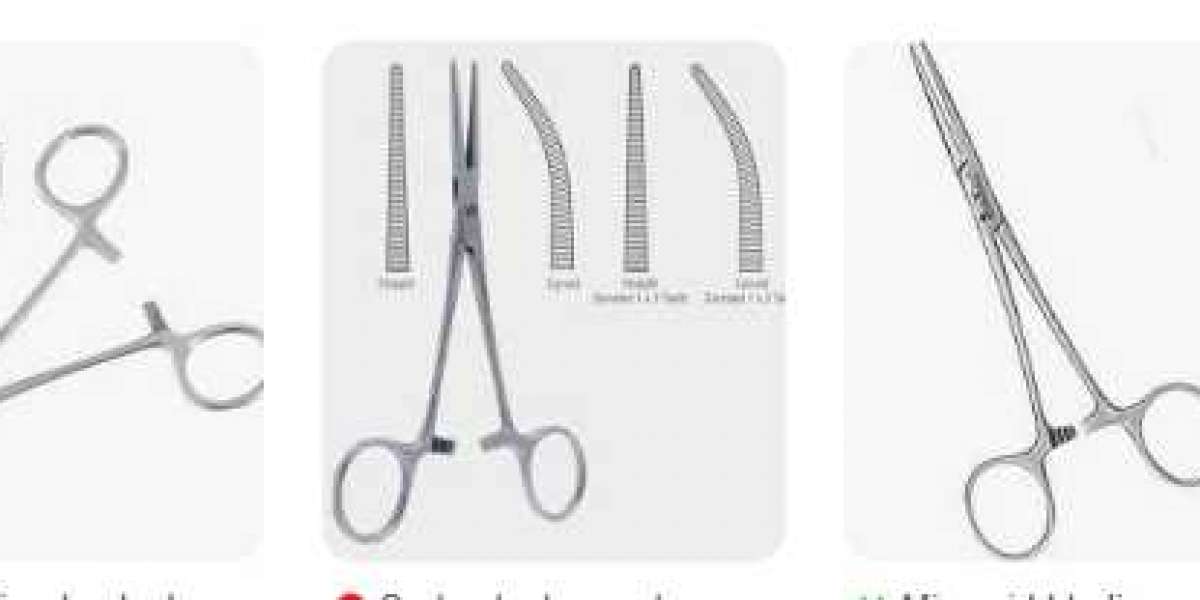

are a type of hemostatic clamp widely used in surgical procedures to control bleeding and manipulate tissues. Named after the American surgeon George Washington Crile, these forceps are a standard instrument in operating rooms due to their reliability and versatility.
Design and Features
Material: High-quality stainless steel, resistant to corrosion and easy to sterilize.
Length: Typically ranges from 5 to 7 inches (12–18 cm).
Jaws: Serrated, straight or curved, to securely grasp blood vessels or tissues.
Ratchet Lock: Allows the forceps to stay clamped without constant hand pressure.
Handles: Ergonomically shaped for precision and comfort during surgery.
Primary Uses
Hemostasis: Clamping blood vessels to stop or control bleeding.
Tissue Manipulation: Holding or retracting soft tissues safely.
Dissection Assistance: Separating tissue layers during surgery.
Tip: Crile forceps are ideal for medium-sized vessels. For very fine vessels, surgeons use Mosquito forceps, while larger vessels may require Kelly forceps.
Types of Crile Forceps
Straight Crile Forceps: Commonly used for superficial vessels.
Curved Crile Forceps: Better suited for deeper surgical sites.
Crile-Wood Forceps: A finer variation for delicate procedures.
Advantages
Secure grip: Serrated jaws prevent slippage.
Versatile: Applicable in general surgery, gynecology, orthopedics, and more.
Reusable and sterilizable: Long-lasting surgical instrument.
Conclusion
Crile forceps are indispensable in surgical procedures, providing reliable hemostasis and safe tissue handling. Their versatility and precision make them a critical tool in achieving effective surgical outcomes.