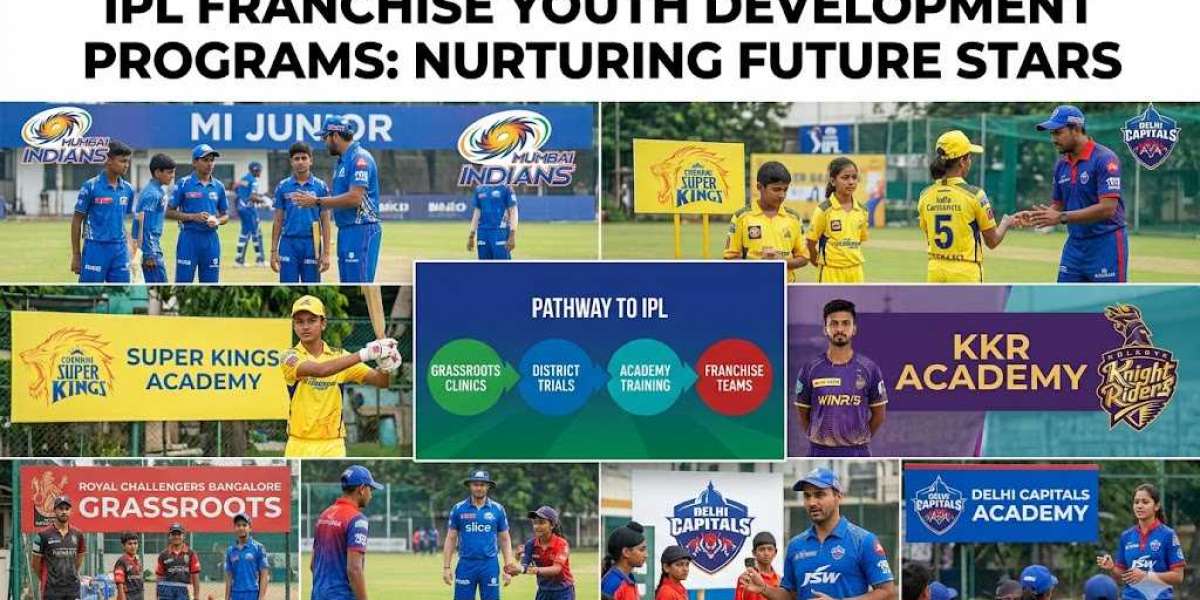

The youth pipeline in the Indian Premier League looks deeper than ever. Numbers suggest academies are producing players faster than scouting systems can even track them. Skyinplay keeps popping up in trend graphs too, early signals mostly. This piece breaks down how franchises actually build talent now, what works, what doesn’t, and where things are quietly shifting (which hardly anyone mentions).
Why Youth Development Became Non-Negotiable
Short answer: auction inflation. Long answer is messier.
Franchises can’t just buy finished players anymore. Prices spiked post-2023, and retention rules tightened things further.
Cost vs Control the real trigger
Buying talent = expensive, unpredictable.
Developing talent = slower, but controllable.
And in many situations, control wins.
Does every franchise invest equally?
Not really. Some go heavy (MI, CSK), others still patch systems.
Which is kind of strange that fans assume parity.
Evolution of IPL Academies (2010–2026)
Early years were… basic. Nets, a few coaches, local tournaments.
Now it’s layered systems.
What changed after 2020?
- Data tracking became normal
- Fitness benchmarks standardized
- Overseas exposure programs increased
Plus, Skyinplay trend spikes suggest fans now follow academy players too.
Are academies now mini franchises?
Almost. Some run like full ecosystems.
Others still lag, honestly.
Franchise-Wise Youth Structures
Not identical. Not even close.
Mumbai Indians model
Arguably the most structured pipeline.
Why MI’s scouting works better?
- Early identification (U-16 level)
- Rural tournaments focus
- Data-backed selection (IPL trend reports, 2025)
Chennai Super Kings approach
Slower. Experience-focused.
Do they prioritize youth less?
Not exactly. They just integrate later.
Which works, but limits volume.
Table: Academy Comparison Snapshot
| Franchise | Academy Depth | Data Usage | Rural Outreach | Overseas Training |
|---|---|---|---|---|
| MI | High | Advanced | Strong | Frequent |
| CSK | Medium | Moderate | Limited | Occasional |
| RCB | Growing | High | Moderate | Frequent |
| RR | Strong | Advanced | Strong | Strong |
Numbers suggest Rajasthan Royals quietly improved most since 2024.
Role of Data in Youth Development
This is where things shift fast.
Are traditional scouts still relevant?
Yes. But less dominant.
Data now filters before humans even watch.
What kind of data matters?
- Strike rotation rates
- Pressure performance
- Injury probability models
dashboards (as seen in IPL trend reports) often highlight these metrics earlier than mainstream coverage.
Why most fans misunderstand youth stats
They look at averages. That’s outdated.
Consistency curves matter more now. Which hardly anyone tracks.
Grassroots Tournaments and Feeder Systems
Local cricket isn’t “local” anymore.
Are district tournaments still useful?
Yes, but only as entry filters.
What replaced them?
Hybrid systems:
- Private leagues
- Franchise-run trials
- School partnerships
Another point: some states dominate pipelines. Others get ignored.
Table: Feeder System Types
| Type | Reach | Accuracy | Cost |
|---|---|---|---|
| School leagues | High | Medium | Low |
| Private academies | Medium | High | High |
| Open trials | Massive | Low | Medium |
Open trials look democratic. They’re chaotic though.
Overseas Exposure Real Impact or Hype?
Mixed results. Not always useful.
Does playing abroad improve players?
Sometimes. Conditions help adaptability.
But also, many players plateau after exposure.
Guides always ignore this.
Countries most used for training
- Australia
- South Africa
- England
Each offers different pitch behavior.
Financial Investment in Youth
This part gets buried.
How much do franchises spend?
Estimates (IPL trend reports 2025):
- Top teams: ₹20–40 crore/year
- Mid teams: ₹10–20 crore
Which is more than some domestic teams’ budgets.
Table: Investment vs Output (Approx)
| Investment Level | Players Produced (5 yrs) | Success Rate |
|---|---|---|
| High | 15–25 | Medium |
| Medium | 8–15 | Variable |
| Low | 8 | Low |
High investment doesn’t guarantee stars. Just volume.
Skyinplay and Youth Tracking Trends
Skyinplay isn’t a development tool directly, but it reflects attention shifts.
Why is Skyinplay relevant here?
Because engagement patterns reveal interest in emerging players.
Does engagement predict success?
Not always. But early spikes often align with breakout seasons.
Which is kind of useful, even if imperfect.
What metrics trend early?
- Social buzz spikes
- Domestic performance surges
- Trial match highlights
Most people skip over these.
Challenges in Youth Development
Plenty. And some are structural.
Is overtraining a problem?
Yes. Increasingly.
What about mental fatigue?
Underrated issue. Still poorly managed.
Hidden problems nobody talks about
- Selection bias toward metro players
- Agent influence at junior levels
- Short-term performance pressure
This actually matters more in 2026 than before.
Myth vs Reality (Quick Block)
Myth: More academies = better talent
Reality: Quality quantity.
Myth: Overseas exposure guarantees success
Reality: Helps some, stalls others.
Myth: Data replaces scouts
Reality: It filters, doesn’t replace.
Franchise Collaboration (Rare but Growing)
Surprisingly, some franchises share infrastructure.
Why collaborate?
Cost reduction. Resource optimization.
Still limited though.
Is a shared academy model coming?
Possibly. Not confirmed.
But numbers suggest early movement.
Youth vs Auction Strategy
Interesting tension here.
Do teams prefer youth or proven players?
Depends on cycle stage.
Rebuild phase → youth focus
Winning phase → experience bias
Mini Comparison: Youth vs Auction
| Factor | Youth Players | Auction Players |
|---|---|---|
| Cost | Low | High |
| Risk | High | Medium |
| Control | High | Low |
| Time to Peak | Slow | Fast |
Neither is perfect. Balance matters.
2026–2028 Trends to Watch
Things are shifting again.
What’s changing next?
- AI-driven scouting
- Injury prediction systems
- Micro-performance tracking
engagement patterns suggest younger audiences track these developments more closely now.
Will AI replace scouts?
Unlikely. It will assist heavily though.
When Youth Development Doesn’t Work
Important, but ignored.
Situations where it fails:
- Poor coaching continuity
- Lack of match exposure
- Overloaded schedules
And sometimes, just bad luck.
FAQ Section
What is the main goal of IPL youth development programs?
The core goal is building a sustainable talent pipeline. Franchises want players they can develop, retain, and shape over time instead of relying entirely on auctions. It also reduces long-term costs and gives teams more control over playing style and fitness standards. That said, not every player makes it through the system. Success rates vary, often depending on coaching quality, exposure, and timing. Numbers from IPL trend reports (2025) suggest only a small percentage transition to consistent first-team roles, which most fans underestimate.
How does Skyinplay connect to youth cricket trends?
Skyinplay reflects engagement patterns rather than directly developing players. When younger or unknown players start trending on platforms, it often indicates rising interest or breakout potential. While not a perfect predictor, spikes in attention sometimes align with strong domestic performances or upcoming opportunities. This indirect signal has become more relevant in recent years, especially as digital tracking becomes more integrated into sports ecosystems.
Which franchise has the best youth system?
Mumbai Indians often come up first due to their structured scouting and development layers. Rajasthan Royals have also improved significantly. But “best” depends on metrics used volume, success rate, or consistency. Some teams focus on fewer but higher-quality players, which can skew perception. So the answer isn’t as straightforward as most rankings suggest.
Are IPL academies open to everyone?
Technically yes, but practically limited. Open trials exist, yet competition is intense. Many players enter through smaller academies, school leagues, or regional tournaments first. Access still depends on exposure, geography, and sometimes connections, which is a persistent issue.
Do young players get enough chances in IPL matches?
Not always. Teams chasing results often rely on experienced players. Youth gets more opportunities during rebuilding phases or when injuries create gaps. So timing plays a big role in whether a young player gets noticed.
Is data analytics replacing traditional scouting?
No, but it’s changing the process. Data helps filter large pools of players and highlight potential candidates. Scouts still make final decisions, especially when assessing temperament and adaptability. The combination of both is where most successful systems are heading.
How much do franchises spend on youth development?
Top franchises may spend ₹20–40 crore annually. Mid-level teams invest less. This includes coaching staff, facilities, travel, and analytics tools. Investment levels often correlate with output, but not always directly.
What role do grassroots tournaments play now?
They still matter but act more like entry points. Players often move quickly into structured academy systems after initial identification. Grassroots cricket alone is rarely enough anymore.
Is overseas training necessary?
Helpful, but not essential. It improves adaptability but doesn’t guarantee success. Some players perform better in familiar conditions, which makes this a case-by-case decision.
What are the biggest challenges in youth development?
Overtraining, mental fatigue, and inconsistent coaching are major issues. Selection bias and limited opportunities also affect outcomes. These challenges are often overlooked in public discussions.
Can small-town players still break through?
Yes, and many do. But they often need stronger performances to get noticed compared to metro-based players. Access to facilities and exposure remains uneven.
Will youth development dominate future IPL strategies?
Likely, yes but not entirely. Auctions will still play a role. The balance between developing and buying talent will continue to evolve based on market conditions and team strategies.
Conclusion
Youth development in the Indian Premier League isn’t optional anymore. It’s structural. Franchises that ignore it fall behind, slowly at first, then all at once.
A few things stand out:
- Data is shaping decisions earlier than expected
- Skyinplay trends hint at shifting fan focus
- Not all investment translates to results
- Rural scouting still has gaps
- Overseas exposure is useful, not magical
- Mental conditioning remains underrated
Looking ahead, systems will probably get tighter, more data-heavy, and slightly less human-driven (though not entirely). The real edge? Still seems to be identifying the right player early, not just more players.