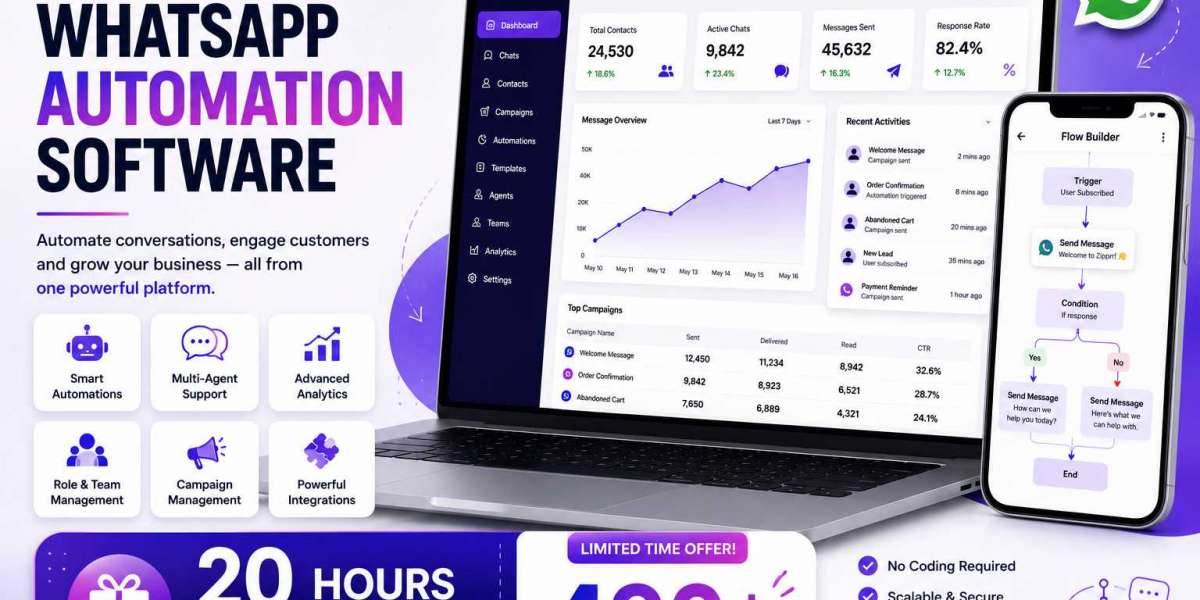

WhatsApp AI automation is the practice of using artificial intelligence to handle conversations on WhatsApp automatically—answering questions, qualifying leads, sending order updates, and booking appointments without a human typing every reply. In short, it turns the messaging app your customers already use into a 24/7 self-service channel. The technology pairs the WhatsApp Business API with an AI layer that understands natural language, so a customer can ask "where is my order?" in their own words and get an accurate answer in seconds.
How the technology actually works
Under the hood, three components work together. First, the WhatsApp Business API connects your business number to a server so messages can be sent and received programmatically. Second, an automation engine decides what happens with each incoming message. Third, an AI model interprets free-text questions and generates relevant responses. Most modern systems are hybrid: rule-based flows handle predictable journeys like checkout or returns, while the AI handles open-ended questions. If you want to see how these pieces fit into a ready-made platform, the team behind this has packaged the API connection, flow builder, and AI layer into one deployable product.
Rule-based vs AI-assisted vs hybrid
A rule-based bot follows a decision tree—fast, cheap, and predictable, but rigid. An AI-assisted bot interprets intent and answers in natural language, which feels more human but needs guardrails. The hybrid approach, now dominant in 2026, uses committed rule-based flows for transactions and AI for everything else. Industry data suggests well-tuned WhatsApp AI automation can resolve between 55% and 80% of pre-sale and support queries without human involvement, cutting response times from hours to seconds.
What it can do for a business
The practical use cases are wide. An AI agent can answer FAQs around the clock, collect lead details and push them into your CRM, send shipping notifications, and even make live API calls during a conversation to check stock or confirm a booking. Because WhatsApp messages carry roughly a 98% open rate against about 20% for email, automation on this channel reaches people far more reliably. Businesses exploring a often start with support deflection, then expand into sales and re-engagement once they see the response rates.
Why ownership matters
Most popular tools—WATI, AiSensy, Interakt and similar—are subscription SaaS products where you rent access and pay monthly per agent or per chatbot. That works, but costs scale with you and your data lives on someone else’s servers. The alternative is owning the software outright. A you install on your own server lets you brand it, customize the logic, and avoid recurring per-seat fees. For agencies and high-volume senders, that ownership model can change the economics entirely.
Getting started
Starting is simpler than most expect: secure a WhatsApp Business API number, choose an automation platform, map your most common customer questions into flows, connect your backend systems, and test thoroughly before going live. Whether you choose a hosted tool or decide to , the key is to begin with a handful of high-volume use cases rather than trying to automate everything at once.
Common misconceptions worth clearing up
A few myths slow businesses down. The first is that WhatsApp AI automation is only for large enterprises—in reality, a small shop automating order updates often sees a faster payback than a corporation. The second is that automation feels cold and robotic; modern AI matched to your brand voice reads naturally, and customers usually prefer an instant accurate answer to a delayed human one. The third is that setup takes months. With a foundation already built, most teams launch their first useful flows in days, not quarters.
It also helps to separate WhatsApp AI automation from the older idea of mass "blasting" messages. Automation is conversational and consent-based: it responds to what a customer actually asks, pulls real data, and guides them toward an outcome. That distinction matters both for results and for staying within Meta’s rules, which reward responsive, task-focused messaging and penalise spammy broadcasting.
The bottom line
WhatsApp AI automation is no longer experimental—it is becoming the default way businesses handle messaging at scale, combining the reach of the world’s most-used messaging app with AI that resolves the majority of routine conversations on its own. If you want full control over branding, data, and cost, explore Zipprr’s and build a channel your customers will actually respond to.