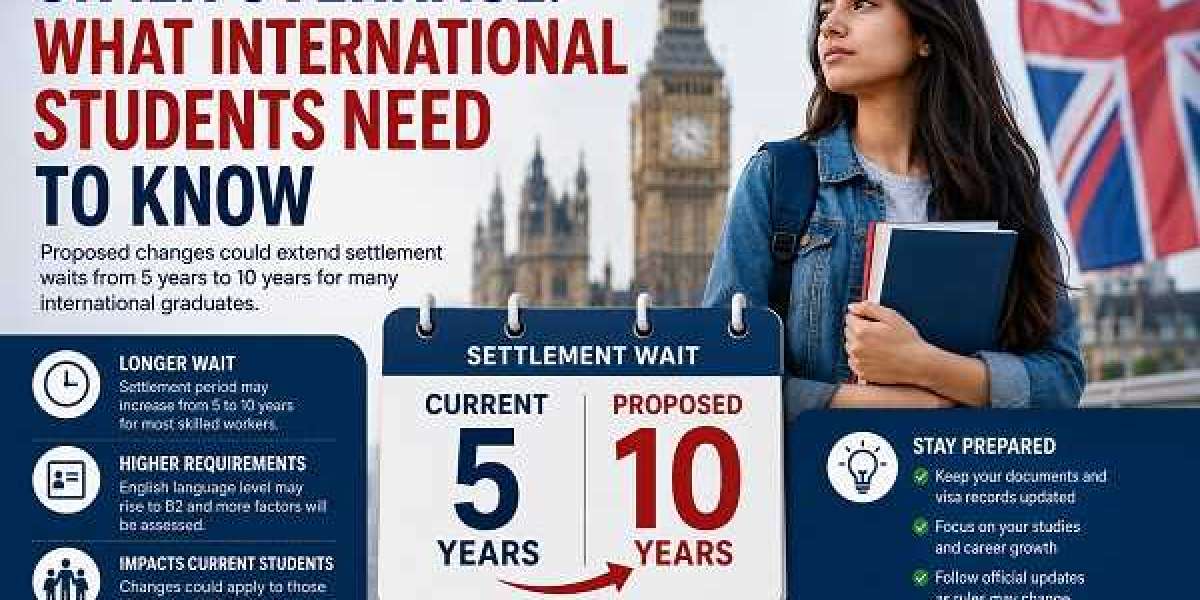

The proposed UK ILR overhaul could change one of the biggest calculations international students make when choosing Britain: how long it may take to build a permanent future there.
The government’s proposed “earned settlement” model would replace the current five-year baseline with a ten-year period for many applicants. Some lower-skilled workers could face fifteen years, while selected groups may have access to faster routes.
For students, the issue goes beyond immigration paperwork. A longer settlement timeline could affect job choices, salary expectations, family plans and the decision to remain in Britain after graduation. The research source also highlights a particularly sensitive question: whether students already in the UK could be affected by the new framework.
The Study-to-Settlement Path Could Stretch
The proposed changes are easier to understand when the entire student journey is considered.
An international student may arrive in the UK for a one-year master’s degree, move to the Graduate Route after completing the course and then secure a Skilled Worker visa. Only qualifying residence on the relevant settlement route counts toward the Skilled Worker settlement period.
Under the current system described in the research, this entire journey can take roughly seven to eight years from first arrival to ILR. Under the proposed model, the journey could extend to twelve to fifteen years, depending on salary, occupation and the final rules.
That potential increase changes the meaning of long-term planning.
A student who expected to spend several years studying and working before obtaining permanent residence could instead be looking at a much longer period of temporary immigration status. That can affect decisions about employment, housing and family life.
It also makes the first job after graduation more important. Students may begin thinking about salary progression and occupation not only as career issues but also as factors that could influence their settlement options.
Why Transitional Protection Matters
Current students are watching the consultation closely because the proposed framework could potentially reach people who are already in Britain but have not obtained settlement.
The research source notes that transitional protection remains under discussion. That means a student who entered the UK under the existing rules does not yet have certainty about whether their original settlement expectations will be protected.
Consider a student who arrived in 2023 and planned to move from university into sponsored employment. Their decisions may have been based on a five-year qualifying period. If the rules change while they are partway through the process, their expected timeline could become much longer.
The uncertainty is therefore as important as the proposed waiting period itself.
The consultation also proposes removing the existing ten-year long-residence route. That route can allow qualifying time across different immigration categories to contribute toward settlement. Its proposed abolition could have particular consequences for people with complex immigration histories.
The English-language requirement may also become tougher. The proposal discusses raising the standard from CEFR B1 to B2 for several settlement routes. Students could therefore face a longer qualifying period alongside additional requirements.
Academic Pressure Remains Part of the Picture
International students must deal with these uncertainties while continuing to meet university requirements.
Essays, reports, research projects and examinations do not pause because immigration policy is changing. A student may be trying to understand settlement proposals while also preparing coursework and applying for graduate jobs.
Keeping academic responsibilities manageable can therefore help students protect their future options. Those looking for support with written coursework can explore as an academic resource.
The choice of degree can also become more significant. If the final settlement system rewards particular levels of income or certain professional categories, students may look more carefully at the career opportunities attached to different qualifications.
Students managing demanding assignments while working through course decisions can also consider for additional academic support.
The connection is simple: stronger academic preparation can support better career choices, while career choices may become increasingly relevant to immigration planning.
Career Progression Could Influence Settlement
The proposed model includes possible exceptions to the ten-year baseline.
The consultation discusses a potential three-year route for certain high earners and categories such as Global Talent or Innovator Founder. A five-year route has also been floated for some frontline public-service roles.
These proposals could influence how international graduates approach their careers.
A graduate may previously have compared job offers mainly on salary, location and professional development. Under the proposed system, they may also ask whether a role could eventually place them on a faster settlement route.
For most graduates relying on standard Skilled Worker sponsorship, however, the ten-year baseline remains the central scenario described by the proposal.
Employers could also face new considerations. Longer sponsorship periods may affect recruitment and retention strategies. Graduates who once expected to reach settlement within five years may now need to decide whether they want to remain with a sponsoring employer, change careers or consider opportunities outside Britain.
A Challenge for UK Universities
The proposed reforms could affect the wider international education market.
The UK has long attracted students with a combination of university reputation, employment opportunities and a possible route toward permanent residence. If that route becomes longer and less predictable, settlement could become a more important factor in international student decisions.
The research source highlights countries such as Canada and Australia as competing destinations. If applicants believe those countries offer more predictable long-term options, UK universities could face stronger competition for international enrolments.
Universities and education advisers may therefore need to communicate more carefully about post-study opportunities. The familiar five-year settlement plan should not be treated as a guaranteed future pathway while the proposed reforms remain under consultation.
At the same time, it would be premature to conclude that the UK will lose its appeal. The final policy could contain transitional arrangements or other provisions that significantly change the outcome.
What Students Should Do Now
The most practical response is to prepare without assuming the worst.
Students should maintain detailed records of visa dates, route changes, employment history and salary progression. These details could become important if future transitional rules depend on specific dates or thresholds.
They should also separate current law from proposed policy. According to the research source, the existing five-year qualifying period remains legally in force until new Immigration Rules are formally introduced.
The twelve-to-fifteen-year timeline should therefore be understood as a possible outcome under the proposal, not as a confirmed requirement.
For students, the sensible strategy is flexibility. Build strong academic credentials, develop career options and keep track of official changes. Avoid making irreversible decisions based only on headlines while the government is still working through the consultation.
The proposed ILR overhaul could change the relationship between international education and permanent residence in Britain. It may make salary, occupation, contribution and integration more significant while extending the period before many graduates can settle.
The key lesson for international students is simple: prepare for a longer journey, but do not mistake a proposed route for a final destination.