
Ciabatta is increasingly moving from artisan bakeries into retail, foodservice, and industrial production. However, scaling ciabatta is not simply a matter of increasing machine speed. Its soft, high-hydration dough, irregular shape, and open crumb structure require careful mechanical handling throughout the production process.
For manufacturers evaluating a , the most important question is therefore: how can automation improve consistency without damaging the dough structure?
High-Hydration Dough Changes the Automation Strategy
Compared with firmer bread dough, high-hydration ciabatta dough is softer, more extensible, and more adhesive. Excessive compression during dividing or shaping can disturb the gas cells created during fermentation, while aggressive conveying can stretch or deform the dough.
HEXEON's recent technical analysis highlights low-stress handling, accurate portion control, controlled forming, stable conveying, and fermentation management as key considerations for industrial ciabatta production.
This means a professional shaping line should be designed around the behavior of the dough rather than simply maximizing throughput.
Three Areas That Matter Most
1. Gentle dough handling
The forming process should minimize unnecessary compression and stretching. Controlled dough movement and appropriate contact surfaces can help preserve the internal structure responsible for ciabatta's characteristic open crumb.
2. Consistent portioning and forming
Weight and dimensions directly influence baking behavior and finished-product consistency. A reliable system should maintain stable portioning and controlled forming while allowing production parameters to be adjusted for different recipes and product sizes.
3. Stable conveying and integration
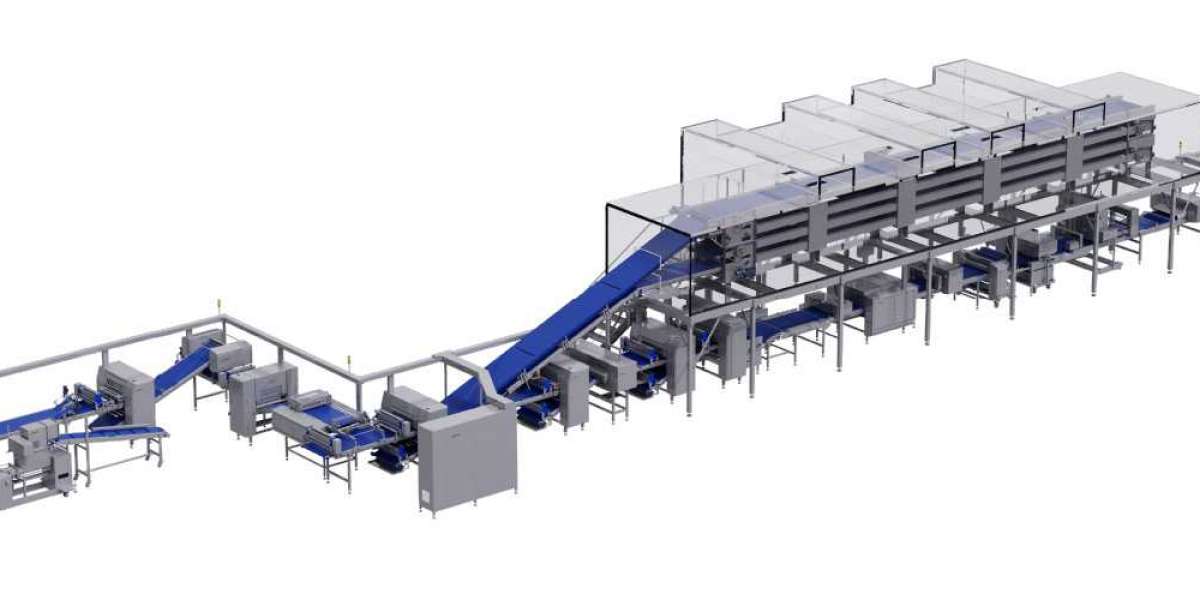
High-hydration dough can easily deform during transfers. Synchronizing feeding, dividing, shaping, conveying, proofing, and downstream processes is therefore more important than maximizing the speed of one individual machine.
Flexibility Is Becoming a Competitive Advantage
Modern bakeries rarely produce only one bread specification. Mini ciabatta for sandwiches, standard retail loaves, and larger foodservice formats may require different weights and dimensions. HEXEON's recent Ciabatta content emphasizes the need for molding systems capable of supporting different weights, lengths, widths, and product formats.
A modular production approach can make future product changes easier and reduce the need for major equipment modifications.
HEXEON: Automation Built Around Production Requirements
HEXEON develops automated bakery production lines for commercial and industrial applications, combining precision mechanical engineering, food-grade materials, intelligent control systems, modular configurations, and rapid product changeover. Its broader portfolio also includes robotic sorting and handling solutions.
For a bakery considering a Ciabatta dough shaping line, equipment selection should begin with the actual recipe and production target. Hydration, flour strength, fermentation method, dough temperature, piece weight, product dimensions, capacity, and factory layout all influence the final configuration.
The future of industrial ciabatta production is not simply about producing more bread per hour. It is about achieving repeatable quality at scale.
By combining gentle dough handling, accurate shaping, intelligent control, and flexible production architecture, HEXEON provides a foundation for bakeries looking to transform delicate ciabatta dough into a more consistent, efficient, and scalable industrial product.