
Introduction:
A brings together the equipment needed to inspect, measure, roast, prepare, and evaluate coffee samples in a controlled environment. For coffee producers, exporters, buyers, laboratories, and roasters, consistent sample preparation is essential because small differences in handling can influence evaluation results. In Vietnam, where commercial Robusta production exists alongside growing Arabica and specialty coffee activity, professional laboratory workflows can help businesses compare lots more systematically. Coffee Pro Direct provides coffee equipment solutions that can support sample preparation, roasting, cupping, and quality-control processes.
What Is a Coffee Lab Sample Preparation Kit?
A coffee lab sample preparation kit is a collection of tools used to prepare green coffee for physical and sensory evaluation. Depending on the laboratory, the kit may include precision scales, sample trays, sieves, moisture meters, density measurement equipment, a sample roaster, temperature monitoring tools, grinders, cupping bowls, spoons, kettles, timers, and documentation materials. The Specialty Coffee Association's current Premier Training Campus requirements identify equipment such as sizing screens, moisture meters, density meters, grading mats, grinders, scales, bowls, kettles, and stopwatches for professional coffee evaluation environments.
Why Consistent Sample Preparation Matters
Coffee evaluation is only useful when samples are prepared consistently enough to support meaningful comparison. Differences in sample weight, roast development, grinding, water, temperature, or timing can affect what an evaluator experiences in the cup. The SCA's current standards include SCA-102 for Sample Preparation and Tasting Mechanics, alongside descriptive and affective assessment standards. These standards are designed to create a shared framework for quality, consistency, and professional coffee evaluation. A properly organized laboratory kit helps reduce avoidable variation throughout the testing process.
Essential Components for a Professional Coffee Lab
The exact contents of a coffee lab sample preparation kit depend on the laboratory's purpose. A green coffee exporter may prioritize physical analysis and sample roasting, while a specialty roaster may require more sensory equipment and roast-development tools. A comprehensive setup can include green coffee containers, precision scales, sample trays, sizing screens, moisture measurement equipment, density tools, sample roasters, grinders, cupping vessels, spoons, water equipment, timers, and evaluation forms. Combining these tools in one workflow makes it easier to move from green-bean inspection to roasting and sensory assessment without unnecessary delays.
Precision Scales for Accurate Sample Weighing
Precision scales are among the most useful components of a laboratory setup. Accurate weighing helps establish consistent sample sizes before roasting, grinding, or cupping. A scale should provide appropriate resolution for the laboratory's intended application and should be easy to clean. It should also remain stable on a level work surface. SCA Premier Training Campus requirements include scales as part of professional cupping equipment, demonstrating the importance of accurate measurement in structured evaluation environments. Coffee Pro Direct can help businesses consider weighing equipment alongside their broader sample-preparation workflow.
Green Coffee Trays and Sample Containers
Organization becomes increasingly important when a laboratory handles numerous samples simultaneously. Sample trays and containers can help separate lots, preserve identification, and reduce the possibility of mixing coffees. Each sample should have a clear identification system connecting the green coffee to its roasting record, physical measurements, and sensory evaluation. Containers should be clean, dry, durable, and appropriate for coffee storage. A simple labeling process can improve traceability from the initial green-bean inspection through sample roasting, cupping, reporting, and purchasing decisions.
Coffee Sizing Screens and Physical Inspection
Sizing screens allow laboratory staff to classify green coffee according to bean size and identify differences between lots. Physical assessment is one of the four complementary areas within the SCA Coffee Value Assessment framework. The SCA describes physical assessment as covering characteristics including color, defects, moisture content, and size. Including suitable screens and grading tools in a coffee lab sample preparation kit can therefore help businesses collect physical information before proceeding to roasting and sensory evaluation.
Moisture Measurement Before Sample Roasting
Moisture content can provide important information when evaluating green coffee. A moisture meter allows laboratories to obtain a numerical measurement rather than relying on appearance alone. The result can be recorded alongside sample identification, origin, processing method, lot information, and other physical observations. SCA Premier Training Campus requirements specifically list moisture meters among green coffee tools used in professional evaluation environments. Consistent measurement procedures can make it easier for Vietnamese producers, exporters, and buyers to compare samples from different lots and harvest periods.
Density Testing for Green Coffee Analysis
Density measurement can provide another useful physical reference when analyzing green coffee. Bean density may differ between coffees based on variety, growing conditions, processing, moisture, and other factors. Including density measurement within a laboratory workflow can help staff build a broader profile of each sample before roasting. SCA's listed green coffee equipment for Premier Training Campuses includes density meters alongside sizing screens and moisture meters. Physical measurements should be documented consistently so that they can later be compared with roast behavior and sensory observations.
Sample Roaster for Controlled Coffee Preparation
A sample roaster is one of the most important components of a professional coffee lab sample preparation kit when the laboratory needs to evaluate green coffee through roasting and cupping. The machine should provide suitable control over heat and roasting conditions while allowing small samples to be prepared consistently. SCA Premier Training Campus requirements identify a professional-grade sample roaster as part of the roasting environment and specify that it should be separate from the cupping space. Sample roasting gives buyers and quality teams an opportunity to understand the sensory potential of a green coffee before production-scale roasting.
Temperature Monitoring During Sample Roasting
Temperature monitoring helps operators understand how a sample develops during roasting. Rather than relying only on bean appearance, laboratory staff can record temperature behavior and roast duration as part of a repeatable process. Depending on the equipment, useful data may include charge conditions, bean temperature, environmental temperature, development period, and finishing temperature. Keeping roast records helps teams reproduce useful sample profiles and investigate differences between batches. SCA roasting requirements emphasize variable heat control and temperature monitoring, reinforcing the value of measurable roast preparation in professional environments.
Coffee Grinders for Laboratory Sample Preparation
After roasting, samples need to be ground consistently before sensory evaluation. A suitable laboratory grinder should provide repeatable particle distribution and enough capacity for the testing workflow. It should also be easy to clean between samples to reduce the possibility of cross-contamination. SCA Premier Training Campus requirements include grinders as part of cupping equipment. For businesses comparing Vietnamese Robusta, Arabica, or imported specialty coffees, consistent grinding is important because differences in particle size can influence extraction and sensory perception.
Cupping Bowls and Sample Preparation Vessels
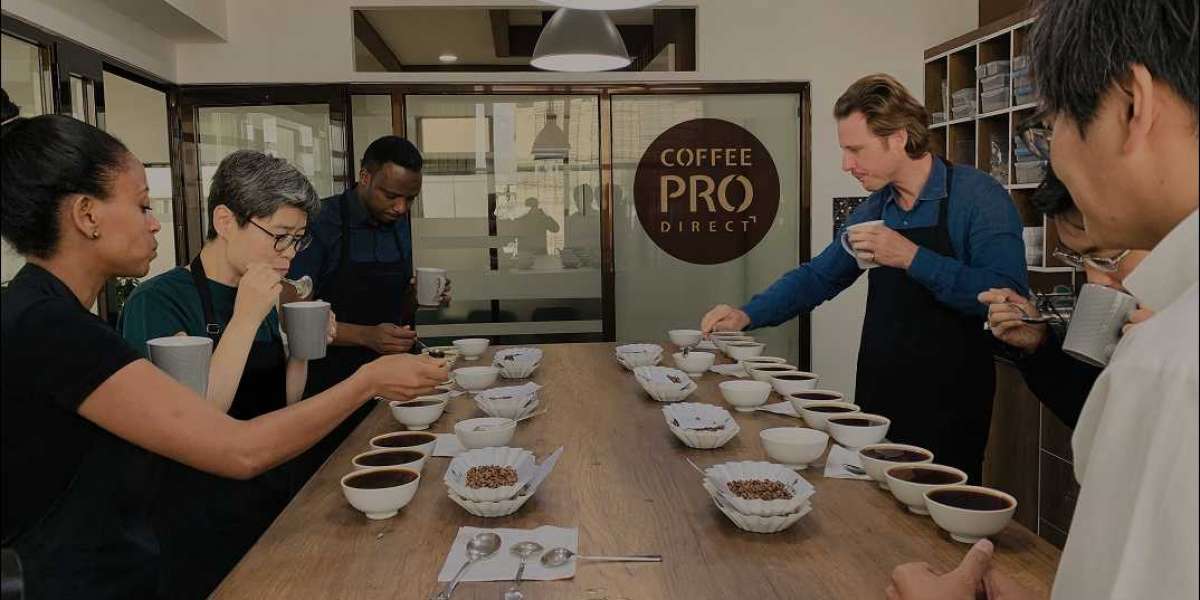
Cupping vessels should be uniform enough to support consistent preparation across samples. Laboratories often use identical bowls or cups so that differences in vessel size or material do not become unnecessary variables. Each vessel should be clean and clearly associated with the correct coffee sample. A professional setup should also provide sufficient vessels for comparative testing. Because sample preparation and tasting mechanics are now covered by SCA-102, laboratories following SCA-oriented workflows should keep their current procedures aligned with the latest applicable standards rather than relying exclusively on older cupping protocols.
Cupping Spoons and Sensory Evaluation Tools
Cupping spoons are simple but important tools in professional coffee evaluation. A suitable spoon allows the evaluator to taste samples repeatedly and move through a group of coffees efficiently. The spoon should be durable, easy to clean, and comfortable for repeated use. A broader sensory setup may also include aroma references, flavor references, timers, sample labels, evaluation forms, and suitable lighting. The goal is to create a controlled environment where the evaluator can focus on the coffee rather than inconsistent equipment or workspace conditions.
Water Quality and Temperature Control
Water is an important part of coffee sample preparation because it becomes the extraction medium used during sensory evaluation. Poor or inconsistent water can influence the flavor experienced in the cup, making comparisons less reliable. SCA Premier Training Campus requirements specify water quality meeting SCA specifications for sensory environments. A laboratory should therefore consider filtration, mineral composition, cleanliness, temperature measurement, and consistent preparation. Including suitable kettles and temperature-monitoring equipment in a coffee lab sample preparation kit can improve repeatability throughout cupping sessions.
Timers and Controlled Sample Preparation
Timing tools help laboratory staff follow consistent preparation procedures. A digital stopwatch or timer can be used to record roast duration, cooling time, grinding intervals, and sensory evaluation stages. SCA Premier Training Campus requirements specifically list stopwatches among cupping equipment. While a timer alone cannot guarantee consistent results, it provides an objective reference that helps evaluators follow the same procedure. For busy laboratories, visible digital timers can also make coordinated group evaluations easier.
Coffee Value Assessment and Modern Laboratory Workflows
Modern coffee laboratories increasingly need workflows that capture more than a single overall score. The SCA Coffee Value Assessment brings together physical, descriptive, affective, and extrinsic assessments. Physical assessment covers characteristics such as defects, moisture, size, and color, while other assessments capture sensory descriptions, preferences, and information such as origin and processing. This broader framework means a coffee lab sample preparation kit should support the collection of reliable information across multiple stages, from green coffee inspection through sensory evaluation.
Preparing Vietnamese Robusta Samples
Vietnamese Robusta can vary significantly between regions, farms, processing methods, grades, and storage conditions. A laboratory can use a structured sample-preparation process to investigate these differences. Staff may begin with physical inspection, record moisture and size, prepare a controlled roast, grind the sample, and conduct sensory evaluation. Consistent procedures make comparisons more useful because differences observed between coffees are less likely to result from inconsistent preparation. For Vietnamese exporters and producers, this workflow can also provide structured information to share with buyers during sample approval and quality discussions.
Preparing Vietnamese Arabica Samples
Vietnamese Arabica presents another opportunity for professional sample evaluation. Coffees from highland production areas can show differences in aroma, acidity, sweetness, body, and other sensory characteristics. A controlled laboratory process allows buyers and roasters to compare these characteristics before selecting a production profile. Physical data can be combined with roast records and sensory observations to create a more complete sample history. Coffee Pro Direct can support businesses building laboratory workflows that accommodate both Robusta and Arabica evaluation without requiring completely separate systems for each coffee type.
Connecting Physical Analysis With Sensory Testing
One of the major benefits of a complete coffee lab sample preparation kit is the ability to connect physical and sensory information. A sample can be assigned an identification number and then tracked through moisture measurement, sizing, density testing, roasting, grinding, cupping, and reporting. The SCA's CVA framework similarly recognizes multiple assessment dimensions rather than relying on one measurement alone. This integrated approach can help laboratories understand relationships between green coffee characteristics and sensory outcomes while creating better records for purchasing and quality control.
Sample Preparation for Coffee Purchasing Decisions
Green coffee buyers can use laboratory sample preparation to evaluate potential purchases before committing to larger quantities. A controlled process can reveal differences that are not obvious from green-bean appearance alone. Buyers may compare samples from multiple suppliers, regions, processing methods, or harvest periods under consistent preparation conditions. Documentation can then combine physical results with sensory observations and relevant origin information. This creates a more structured basis for internal discussions and supplier communication. For Vietnamese exporters, professional sample preparation can also help ensure samples presented to international buyers are prepared consistently.
Sample Preparation for Coffee Quality Control
Quality-control teams can use laboratory preparation kits to investigate incoming green coffee and monitor changes over time. If a business regularly purchases from the same supplier, consistent testing can establish a useful historical record. Unexpected changes in moisture, size, defects, roast behavior, or sensory characteristics can then be documented and investigated. A standardized workflow also makes staff training easier because employees can follow defined preparation steps. Coffee Pro Direct can help businesses build equipment packages around these quality-control requirements, connecting laboratory testing with broader roasting and production operations.
Designing an Efficient Coffee Laboratory Workspace
A laboratory should be organized so that samples move logically from one stage to the next. Green coffee inspection can be positioned separately from roasting, while grinding and cupping should take place in a clean, controlled sensory environment. SCA Premier Training Campus requirements call for a dedicated cupping room with a controlled sensory environment and a separate dedicated roasting space with ventilation, lighting, temperature control, and fire-safety compliance. Even smaller laboratories can apply these principles by separating clean sensory work from roasting activities wherever practical.
Cleaning and Maintaining Laboratory Equipment
Clean equipment is essential for reliable sample preparation. Grinders should be cleaned between coffees according to manufacturer guidance, cupping vessels should be washed thoroughly, scales should remain free of coffee particles and moisture, and sample-roasting equipment should be cleaned regularly. Moisture meters and other measurement devices should be maintained according to their manufacturer's instructions. Laboratories should also inspect cables, sensors, moving parts, heating systems, and exhaust pathways where applicable. A maintenance schedule helps reduce equipment-related variation and protects the long-term investment in a coffee lab sample preparation kit.
Choosing the Right Coffee Lab Sample Preparation Kit
When choosing a coffee lab sample preparation kit, businesses should start with their actual testing requirements. Consider the number of samples evaluated each day, whether the laboratory handles green coffee purchasing, whether sample roasting is required, how many evaluators participate in cupping, and which physical measurements are important. A basic setup may require scales, trays, screens, moisture measurement, roasting, grinding, bowls, spoons, kettles, and timers. A more advanced laboratory may add density measurement, color analysis, aroma references, digital data collection, and specialized quality-control equipment.
Why Coffee Pro Direct Supports Professional Sample Preparation
Coffee Pro Direct helps coffee businesses develop practical equipment workflows for laboratory testing, roasting, cupping, and quality management. A complete coffee lab sample preparation kit can help connect green coffee inspection with controlled sample roasting and sensory assessment, creating a more organized process for producers, exporters, buyers, laboratories, and roasters. For businesses working with Vietnamese coffee, equipment should be selected according to sample volume, coffee types, testing objectives, workspace, and future requirements. A well-planned laboratory setup can provide reliable information while supporting more efficient coffee quality decisions.
Conclusion:
A professional provides the tools needed to move systematically from green coffee inspection to sample roasting, grinding, cupping, and documentation. Precision scales, sizing screens, moisture meters, density tools, sample roasters, grinders, bowls, spoons, water equipment, and timers each contribute to a more controlled workflow. The SCA's current Coffee Value Assessment framework reinforces the importance of gathering multiple types of coffee information rather than depending on one measurement alone. For Vietnam's coffee industry, Coffee Pro Direct can support businesses seeking practical equipment solutions for professional sample evaluation and quality control.
FAQs
What is a coffee lab sample preparation kit?
A coffee lab sample preparation kit is a collection of equipment used to inspect, measure, roast, grind, prepare, and evaluate coffee samples in a controlled laboratory environment.
What equipment is included in a coffee lab kit?
Equipment can include precision scales, sample trays, sizing screens, moisture meters, density meters, sample roasters, grinders, cupping bowls, spoons, kettles, timers, and evaluation tools.
Why is sample preparation important?
Consistent preparation reduces unnecessary variation between samples and makes physical and sensory comparisons more meaningful.
Can a sample preparation kit be used for Vietnamese Robusta?
Yes. A professional kit can support physical inspection, sample roasting, cupping, and quality control for Vietnamese Robusta from different suppliers, regions, grades, and processing methods.
Is a moisture meter important for coffee laboratories?
Yes. Moisture measurement provides useful physical information about green coffee and is included among the green coffee tools listed in SCA Premier Training Campus requirements.
Why is a sample roaster necessary?
A sample roaster allows a laboratory to prepare small quantities of green coffee under controlled conditions before sensory evaluation or larger-scale production testing.
How does the Coffee Value Assessment affect sample preparation?
The SCA's Coffee Value Assessment includes physical, descriptive, affective, and extrinsic assessment approaches. This encourages laboratories to collect broader information about coffee rather than relying on one overall score.
How should coffee lab equipment be maintained?
Equipment should be cleaned regularly and maintained according to manufacturer instructions. Grinders, sample roasters, scales, moisture meters, cupping vessels, and other tools should be checked routinely for cleanliness and performance.
Can Coffee Pro Direct provide coffee laboratory equipment?
Coffee Pro Direct can support coffee businesses looking for equipment solutions covering sample preparation, laboratory roasting, cupping, quality control, and related coffee-processing workflows.