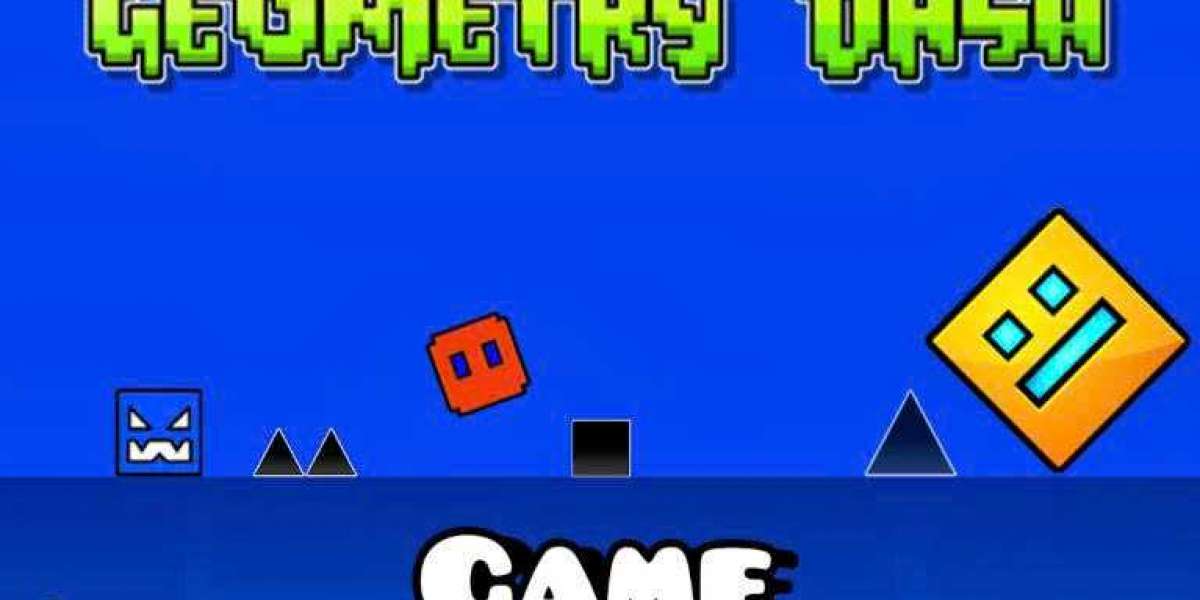

Geometry Dash flips that idea upside down by turning shapes into rhythm, timing, and reaction. If you’ve never taken the time to truly experience one of those satisfying “geometry jumps,” it can feel like the game is just about memorizing levels. But once you learn how to play with attention to timing and your own little momentum, the movement starts to feel more like art than math homework.
In this article, I’ll walk through how to approach an interesting geometry jump using . The goal isn’t to become a speedrunner. It’s to enjoy the learning process, feel more in control, and discover why so many players love the tiny moments between failures.
Gameplay: What an “Interesting Geometry Jump” Actually Means
First, let’s define the experience. In Geometry Dash, a “jump” isn’t always a literal jump button press—though it often is. It’s the moment your character commits to motion: a click that changes height, a tap that flips timing, a short burst of movement that threads through hazards.
An interesting geometry jump usually has three qualities:
- Clear rhythm
The level’s visuals and audio line up so you can feel the pattern. Even if you don’t understand every detail, you sense when something is about to happen. - A decision point
There’s a moment where the outcome depends on you—tap too early or too late and the jump misses the safe landing. - A satisfying correction
The best sections give you feedback. When you improve, it’s obvious. The jump lands better, the rhythm feels smoother, and your frustration turns into focus.
When you start a run, don’t think “I must beat this immediately.” Instead, think “I want to understand this section.” Your first objective is not perfection—it’s recognizing the jump’s structure. Watch how the character approaches the hazard, note the spacing between obstacles, and listen for the beat changes. Geometry Dash often makes timing feel intuitive once you stop rushing.
A simple approach to playing the jump
- Run once just to observe.
Don’t spam attempts. Use one or two runs to understand where the dangerous timing starts. - Pick a single checkpoint in your mind.
For example: “I’m going to survive until the triple jump area,” or “I just want to land the wave section.” This keeps the pressure reasonable. - Treat the tap like a beat.
If the music hits hard right when the character needs to lift, aim for that sensation rather than the exact frame. Your brain learns timing faster through rhythm than through raw speed.
As you keep trying, something changes. Your taps become less random and more like punctuation in a sentence. You stop “testing” and start “speaking” the level.
The learning curve you’ll feel
Early attempts often fail quickly, and that’s normal. The game punishes uncertainty, but it rewards attention. After several tries, you’ll notice the moment where you typically lose control: it might be the first hard timing in the section, the transition between movement modes, or the instant your eyes stop tracking and your fingers keep going.
That’s why an interesting geometry jump is memorable even before success. It teaches you how to look.
Tips: Make Your Jumps Feel Reliable (Without “Grinding” Your Fun)
You don’t need high skill to enjoy Geometry Dash. You just need a few habits that reduce confusion and increase consistency. Here are practical tips that make a noticeable difference.
1. Train your eyes, not just your finger
Many players focus entirely on clicking. But the bigger improvement often comes from what you watch:
- Track the character’s last safe landing, not the obstacle you’re about to hit.
- Look for repeating patterns: the same triangle, the same spacing, the same audio accent.
- Use the background movement as a pacing guide. If the visuals feel like they “scroll” consistently, your timing will too.
If you can predict what the character will do half a second from now, your taps become easier.
2. Make “small wins” your metric
Instead of “I beat the level,” use metrics like:
- “I’m getting farther than last time.”
- “I’m landing the first jump consistently.”
- “I’m no longer dying at the same hazard every attempt.”
This keeps your motivation intact and prevents the common trap of mindless repetition. Your brain learns better when you’re aware of progress.
3. Adjust timing with intention
When you miss a jump, try not to guess. Change one thing at a time:
- If you’re hitting early, delay your input slightly.
- If you’re hitting late, tap a touch sooner.
- If transitions feel bad, slow down your attention just before the mode changes.
Sometimes the fix is tiny—like moving your tap closer to the beat drop. Other times, you’ll realize you weren’t reading the pattern at all.
4. Respect the transition moments
The most frustrating deaths often happen right after you “feel confident.” That’s because timing can shift between gameplay types. For example:
- A jump that felt easy in isolation becomes hard during the transition from a wave to a cube.
- A rhythm pattern that worked earlier may be mirrored but subtly different.
So when you pass a section you’ve already seen, don’t relax instantly. Your eyes should stay on duty.
5. Play for one section at a time
If you try to conquer the whole level in one sitting, fatigue builds and timing gets sloppy. Instead:
- Choose one jump cluster.
- Repeat that cluster until your performance stabilizes.
- Then move forward to the next part.
This approach also makes the game more satisfying, because you get to feel your improvement.
6. Keep your setup comfortable
This isn’t about “gear” or showing off—it’s simply about reducing unnecessary friction.
- Use a stable frame rate if possible.
- Keep controls consistent (same fingers, same rhythm).
- If you play on different devices, expect timing to feel slightly different.
Your goal is a reliable environment so your skill can actually show.
Conclusion: Enjoy the Rhythm Behind the Shapes
Geometry Dash might start as a challenge, but the most rewarding part is what happens after you stop treating it like a test. When you approach each geometry jump with curiosity—watching patterns, listening for rhythm, and making small intentional adjustments—the game becomes a place to practice timing and attention in a surprisingly fun way.
You’ll still fail. You’ll still miss. But the failures will change. Instead of random frustration, you’ll get clearer feedback: “I tapped too early,” “I lost the beat,” “I’m finally landing this part.” That progression is the real achievement, and it’s why players keep coming back to the next impossible-sounding jump.
So pick a section, commit to learning it, and let the shapes do what they do best—turn geometry into momentum. If you want a place to start looking around, you can use when you’re ready to jump in.