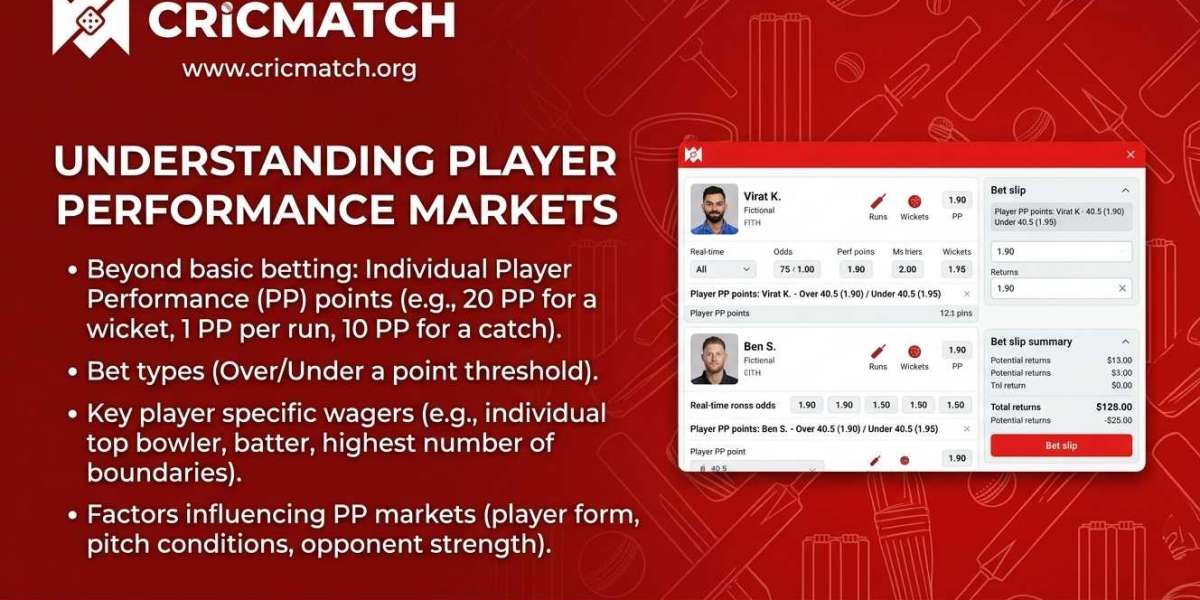

A player performance market focuses on what an individual cricketer does during a match rather than simply which team wins. On , these markets can be understood by looking at measurable actions such as runs, wickets, boundaries, catches, or other defined player statistics. The exact options and settlement conditions can vary by match, format, and platform.
What Is a Player Performance Market?
A player performance market is based on a specific statistical contribution from one player. Instead of considering the overall match result, the market concentrates on an individual outcome.
For example, a market may focus on:
- A batter's total runs
- A bowler's total wickets
- A player's number of sixes
- A player's catches
- A combined performance based on several statistics
The important point is that the market must be read carefully. A player's team can lose while that individual still records a strong performance. Similarly, a team can win without one particular player reaching a specified performance level.
Some player markets use a numerical line. For instance, a batter could have a runs line of 30.5, meaning the market is concerned with whether the player's final total finishes above or below that figure. Other markets may use milestones, such as reaching 50 runs or taking two wickets. Player performance markets commonly use measurable statistics, although the exact scoring formula differs between operators.
Which Player Statistics Can Be Included?
The available statistics depend on the sport, competition, and match format. In cricket, batting and bowling figures are usually the most straightforward areas to understand.
For batters, markets can relate to runs, boundaries or sixes. For bowlers, wickets can be a key statistic. Some markets may also consider fielding contributions such as catches.
A combined performance market can be slightly more complicated because several statistics may contribute to one final figure. For that reason, it is important to understand how each statistic is counted before interpreting the market.
Why Does a Player's Role Matter?
A player's role can significantly affect the opportunity available during a match.
For example, an opening batter may have more chances to face deliveries than someone batting lower down the order. A bowler expected to complete a full spell may have more opportunities to take wickets than one with a limited role.
Recent form can provide useful context, but it should not be considered a guarantee. Batting position, expected workload, opposition quality, venue conditions and match format can all influence an individual contribution.
How Should You Read a Player Performance Market?
Start by identifying four basic details: the player, the statistic, the target or line, and the period being measured.
Suppose a market refers to a batter's runs. You need to establish whether it covers the player's complete innings and what happens if the player does not bat. Likewise, a wicket market should be checked to determine whether it applies to the full match or another defined period.
The may present several market choices, but users should focus on the market description rather than assuming that similarly named options have identical conditions.
What Should You Check Before Selecting a Market?
A few factors can make a player market easier to understand:
Recent Performance
Look at recent innings or bowling spells rather than relying only on a player's overall reputation. A short-term change in form may be relevant, but a small sample should also be treated cautiously.
Playing Position
A batter's position can affect the number of opportunities available. Similarly, a bowler's expected overs and role can influence wicket opportunities.
Match Conditions
Pitch behaviour, weather, venue characteristics and opposition strengths can influence how players perform.
Confirmed Lineup
A player listed in a squad is not necessarily guaranteed to participate. Always check the confirmed playing XI when available.
Settlement Rules
This is one of the most important checks. Rules can differ for abandoned matches, shortened games, player non-participation, retirements and other unusual circumstances.
How Are Player Markets Different From Match Markets?
A match market generally concerns the outcome of the contest, while a player performance market concentrates on one individual's statistics.
For example, a team may win a match even if its leading batter scores only a small number of runs. Conversely, a batter can produce an excellent individual innings while their team ultimately loses.
This distinction makes the two market types fundamentally different. Understanding the specific statistic being measured is therefore more important than simply looking at the team involved.
Can Player Performance Markets Change During a Match?
Some platforms may offer player-related markets while a match is in progress. When this happens, the information available can change as wickets fall, runs are scored, players enter the innings or bowling plans develop.
However, live information should not be confused with certainty. A strong start does not guarantee a particular final score, and a bowler's early wicket does not ensure further success.
Users checking their should also remember that market availability can depend on the particular fixture and platform conditions.
What Does Cricmatch247 Mean in This Context?
The term can refer to the same CricMatch brand context rather than a separate type of player market. The important distinction is the market itself: whether it measures runs, wickets, boundaries, catches or another defined individual statistic.
Before making any decision, users should read the relevant market rules and understand exactly what outcome is being measured.
Conclusion
Player performance markets are designed around individual cricket statistics rather than the final result of a match. Understanding the player’s role, recent performances, expected opportunities, match conditions and settlement rules can make these markets much easier to interpret. The key is to read the exact market definition instead of relying on assumptions or a player's reputation alone.