
Black is a safe choice for a bathroom. Used right, it adds depth, richness and luxury to a room. Used badly, it caves in and clings to every unwanted speck of water. Black bathroom wall panels are the preferred option for many who want the dramatic effect of the color without the expense and elbow-grease of tiling, and they raise a few questions that should be answered before leaping. This guide covers all the basics from finish and pattern to lighting and care, to help you invest in a black scheme that looks as good as it feels.
Choosing the Right Black Finish
Not all black is equal. The finish of the panel makes a huge difference in how it looks and behaves.
Matt blacks are more light-absorbent, creating a soft depth and a relatively smudge-proof surface. Satin blacks have enough shine to brighten a dark bathroom without overpowering. High gloss goes all out – it reflects light and the room around it, creating a dramatic effect, but it also highlights every mark and splash on the panel's surface.
The black finish also varies in its texture. Some panels are smooth to the touch while others are embossed or riven to create a more interesting surface that hides minor marks and imperfections. It's worth seeing a sample in the real light of your bathroom, not just the showrooms, to see how much difference the finish makes.
Patterns to Add Interest to Black
Solid black panels can look fabulous, but patterned designs often add visual interest that enhances the value and appeal of the color.
Black with white or gold veins mimicking marble is the obvious choice for a luxury feel, and it's important to go for variation in the pattern, as a regular repeat on adjacent panels will look artificial. Look out for slate and stone effects for a softer look, and concrete or plaster effects for a more industrial feel in charcoal or almost-black shades. Fluting and ridging creates shadows that add depth, especially if the ridges are lit from above, but should be avoided in favor of easier-to-clean smooth surfaces if there's any risk of soap getting trapped in the grooves.
As a rule of thumb, one patterned panel in a room is enough. It can be used to great effect as the centerpiece for a shower or the wall behind a bath, but other panels should be plain.
Lighting Tips for Black Bathrooms
Lighting is always important in a bathroom, but it takes on new significance in a room with dark walls. A central ceiling statuary is rarely enough on its own. Downlights and wall lights can highlight black panels, and a well-lit bathroom mirror is invaluable. Warm white bulbs tend to look best in a black bathroom, as cooler tones can make the whole room feel flat and gray.
Natural light also plays a role, and if you have a big window in the room, you should have no problem whatsoever with black walls. However, a small window in a windowless bathroom will look best with only one or two black walls, or with black panels that have some gloss to reflect the available light.
Fittings, Colors and Materials That Go With Black
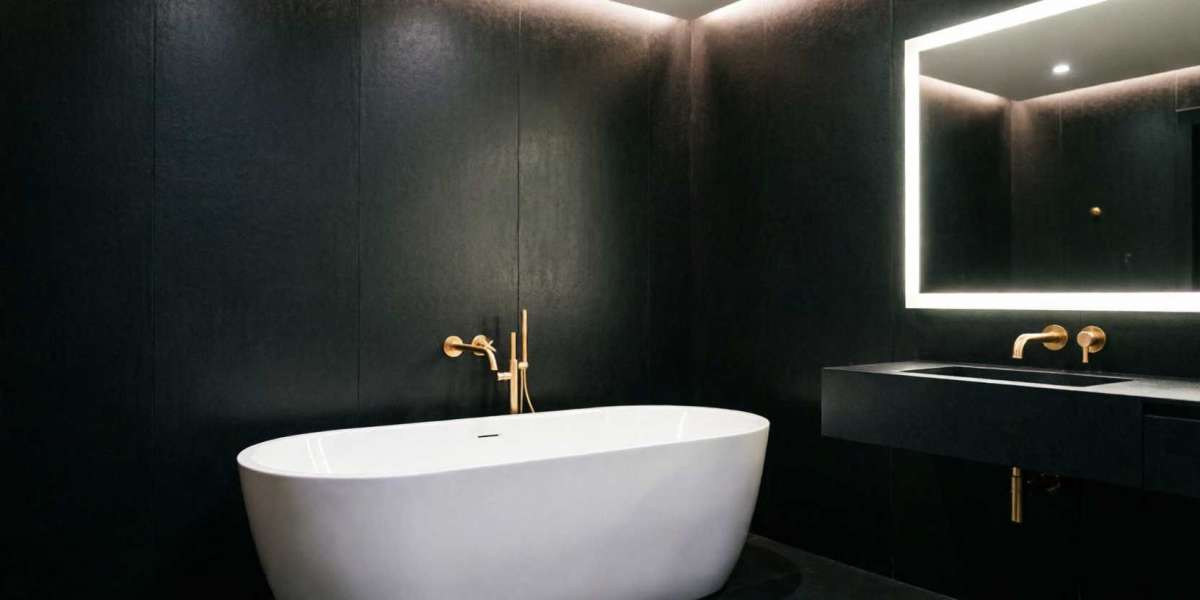
Black is best balanced with other warm colors and materials. Brushed brass or gold taps and fittings add a touch of luxury, while chrome and brushed nickel give a colder modern look. Matt black fittings on matt black walls create a subtle monochrome effect, but they risk being lost in the walls, and should be offset with other elements if possible.
White sanitaryware is also a good choice, and it prevents the room from feeling too dark, especially when teamed with light materials and warm colors. Natural materials also help to lift a black-themed bathroom – a timber shelf or stone-effect flooring brings the outside in, and adds texture and color. Indoor plants that can tolerate the damp are another excellent addition.
Certain combinations always work well, including black marble-effect panels with white sanitaryware and brass fittings, charcoal panels with oak-effect woodwork and chrome fittings, and satin black panels with pale stone floors and black-framed glass.
Living With Black: Marks, Cleaning and Care
The big question on everyone's lips is whether black panels are a good choice for a bathroom. Marks, water spots and limescale are far more noticeable on dark panels than on light ones, and the whole room can look perpetually dirty, especially in areas with hard water – which is most of Britain. The panel's surface isn't any harder to maintain than other materials, but the usual suspects for a bathroom clean – scouring pads, cleaners and the like – are often too abrasive for black panels, particularly gloss ones. The right care will depend on the panel's finish, but as a rule of thumb, the more shine there is, the more delicate the material will be.
Some marks can be removed with a soft cloth or squeegee after each shower, as the water will often evaporate with the grime. The same applies to any excess moisture after cleaning the panel, which will prevent unsightly water spots from forming. Ventilate wherever possible to reduce condensation, and always follow the manufacturer's care and cleaning instructions for any black panel.
Sealing around edges and joints is also a good idea, as cracks in silicone can let water in and ruin the panel. Black panels often use dark silicones for their trims, and a faulty seal will stand out against the panel as much as any water spot or mark.
Other Important Considerations When Buying Black Panels
Black wall panels need as much care during the installation process as any other. The wall must be dry and solid, and any seams or edges must be sealed as instructed so that water can't get trapped behind the panel. If you're planning to use in an enclosed shower area, make sure you buy panels rated for wet rooms, and pay particular attention to the manufacturers' instructions on corners, trims and edges, as these areas will be stressed more during installation and may need extra sealing.
Trim is also an important consideration when shopping around. Most black panels use black trims, but metallic trims in brass or chrome can create a really sharp, designed look. See how much difference it makes to the overall look by requesting a sample, and examine the finished trim in the actual light of the room before buying.
You should also consider how the black panels fit in with the rest of your bathroom. Using black throughout can lead to a rather gloomy feel, especially in smaller bathrooms, and many designers now recommend breaking up dark panels with pale panels and floors. If in doubt, look to the guide to the for inspiration on contrast and layout.
How to Make Your Choice
Decide what finish you want, and then choose between patterned and plain based on the size of the room. Ask for a sample, and spend some time looking at it under the bathroom lights and splashing water on it to test how spots and marks behave. Read the care and wet-area instructions to see what you can and can't do to keep the panel clean. If it all looks good after a week or two, you should have a much better idea of how it will look in your bathroom after a year.
Conclusion
Decide what finish you want, and then choose between patterned and plain based on the size of the room. Ask for a sample, and spend some time looking at it under the bathroom lights and splashing water on it to test how spots and marks behave. Read the care and wet-area instructions to see what you can and can't do to keep the panel clean. If it all looks good after a week or two, you should have a much better idea of how it will look in your bathroom after a year.