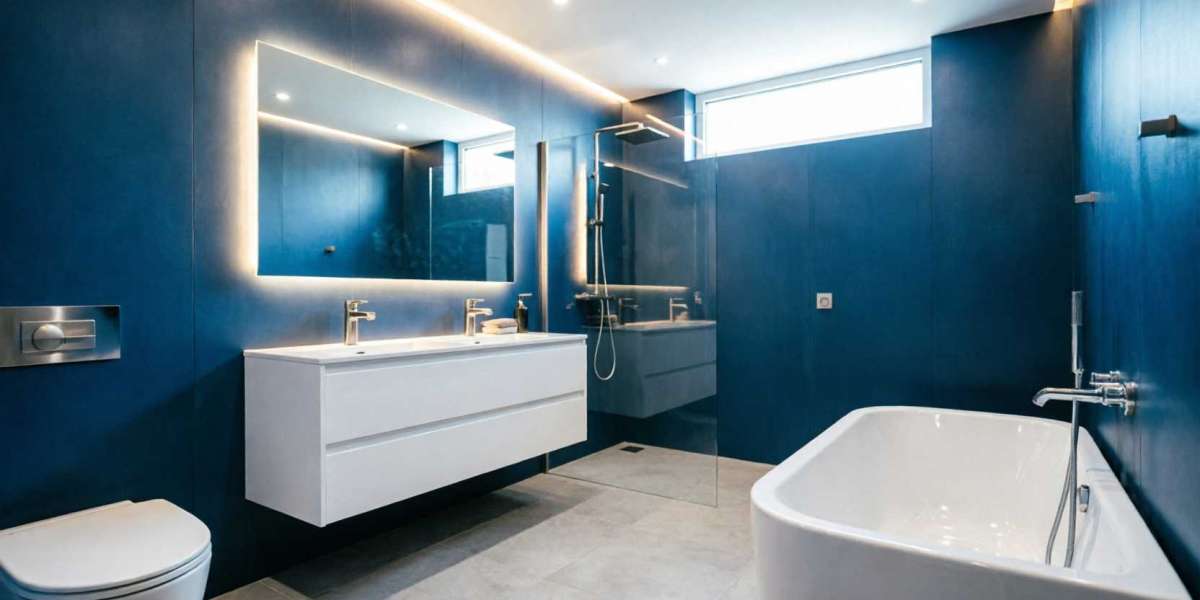

Blue is the color most commonly associated with bathrooms and it's easy to understand why. It evokes feelings of water, cleanliness and calmness; however, it's all too easy to fall into the trap of choosing a pale and cold blue that feels more like a Dentist's surgery than a sanctuary. Used with care, blue panels can be crisp and restful or quietly dramatic - depending on the shade, finish and what sits around them. This article covers which blues suit a modern bathroom, how best to pick patterns and finish, how blue pairs with other materials and how best to care for blue panels in day to day use.
Choosing the Blue to Suit the Room
Blue is a broad church and can look very different in different bathrooms, even when using the same shade. As a rule, north facing or poorly lit rooms will dull cool blues and make them look less appealing but the same shade will look good in warmer or grayer rooms. South facing rooms can cope with brighter blues without appearing cold.
Pale blues such as the sky or powder tone shades feel airy but can look cold without warm lighting and natural materials. These shades are best used in small bathrooms but always combined with soft lighting and warm materials to prevent feeling too sterile. Soft gray blue and duck egg shades are the easiest to live with - they feel calm but versatile and look good with warm and cool fittings. Deeper blues such as navy, midnight and inky teal create a dramatic feel - best suited to a large room or as the color to a single feature wall. The blues that fall between teals and blue greens feel contemporary without being cold.
The best way to choose a blue is to see a sample swatch in your own bathroom, in daylight and under artificial light at night. Colors can look dramatically different under different conditions.
Patterns That Work in Blue
While a solid blue can look good in a matt or satin finish, using a pattern on the panels adds interest and prevents the wall from looking flat.
Patterned blue panels that work well are:
- Marble and stone effects: blue gray marble designs with white or gold veining feel glamorous and subtle stone effects in a muted blue look perfect for a calm scheme. Choose designs that vary in the veining so that there are no repeats
- Tile effect: blue metro, zellige and large format tile designs look good while avoiding grout lines
- Fluted and ribbed designs: vertical grooves in navy or slate blue add shadows with good effect but need to be wiped down to avoid soap build up
- Plaster and mineral effects: a gently mottled blue finish that looks like limewash works well with both modern and period homes
- Geometric and abstract prints: a feature wall, with plain surrounds
If you're not sure about committing to a strong shade or pattern throughout the bathroom, try just having a single blue wall behind the bath or within the shower enclosure.
Finish and Mood
Choosing a finish can make a big difference to how blue looks and how it will be cared for. Matt and satin finishes soften the blue and offer a more modern, understated look. Gloss brings out the deep blue and reflects light well, making it dramatic in shades such as navy or teal, but will also show streaks and splashes. Darker shades are more likely to show limescale and water spots, which is important if you live in a hard water area (as most of the UK is) and so should be balanced with a satin or textured finish.
Fine grained, riven stone or linen-style textures help to disguise any imperfections but, in deeper grains, can hide soap build up that needs regular cleaning.
How to Pair Blue With Other Materials
While blue is versatile, there are some materials that stand out as working better than others.
Brushed brass and gold toned fittings provide warmth and contrast to navy and darker blues. Chrome and brushed nickel fittings are great when paired with pale blues and provide a clean, fresh look. Matt black fittings create a graphic look against lighter blues and gray blues.
Natural materials can help to make blue feel less cold. A wooden shelf or wood effect accent, woven baskets, stone-effect floor and cream or sand towels all help to balance a blue scheme. White sanitaryware also helps to keep everything feeling fresh and let blue walls be a feature color. If you want to introduce a second color, soft terracotta or warm ocher accessories balance the blue well without overpowering it.
Lighting is just as important as the colors chosen and the warmer, more dimmable lights flatter most blues. Very cool lights can push a blue towards a hospital feel and layered lighting from downlights, a lit mirror and possibly wall lights give lots of control over mood at different times of day.
Caring for the Panels in Day to Day Use
Blue panels are just as easy to keep clean as any other color, as long as you bear in mind that darker shades will show more marks. A soft cloth and a gentle cleaner usually do the job and wipe the panels down after showering prevents water spots forming. Avoid scouring pads and harsh chemicals that can dull the finish and look to the manufacturer's advice on cleaning (different materials react differently). Look at the sealant along joints, trims and edges, on a regular basis; mold or cracks in sealant will be more noticeable on a pale blue wall and if there is any gap between the panel and the wall, water can get in behind the panel and cause problems. Replace any discolored sealant as soon as possible and choose a sealant with mold-resistant properties that is suitable for the bathroom. Let it cure for enough time before turning on any showers. Ventilation matters - an extractor fan that runs after showering or a window that can open will do far more to reduce damp than any amount of cleaning.
Thinking About Layout
The wall behind the panels should be sound and dry and any damp resolved before starting. Plan the layout so that joints and cuts fall in appropriate places, particularly around pipework. In the case of a shower enclosure, check that the panels have been tested for wet areas and what impact corners, trims and joints may have on its performance. When browsing the blue , look at the trim options as well as the wall panels, as color-matched trims allow the wall to appear seamless while metallic trims give a deliberately contrasting look that blends in with your fittings.
Consider how the panels will meet the bath, shower tray and floor as these edges take in most of the water and need to be sealed carefully.
Seeing the Whole Scheme
A blue panel looks different depending on the floor, fittings and lighting around it, so seeing the styles in context is useful. The guide to the shows how different panel styles look as part of a modern scheme and is a good reference when considering if blue fits with your plans.
What to Do Next
Narrow your choice down to two or three blues in different finishes and request samples, to see how they look in your bathroom in different lighting. Try holding the samples against your tiles and floor, seeing how the shade compares with your fittings and splashing them with water to see how your marks appear. Look at the manufacturer's guidance on use in wet areas, installation and cleaning. A blue that looks fine after a few days of everyday use is the best indication of what it will look like in the finished scheme.