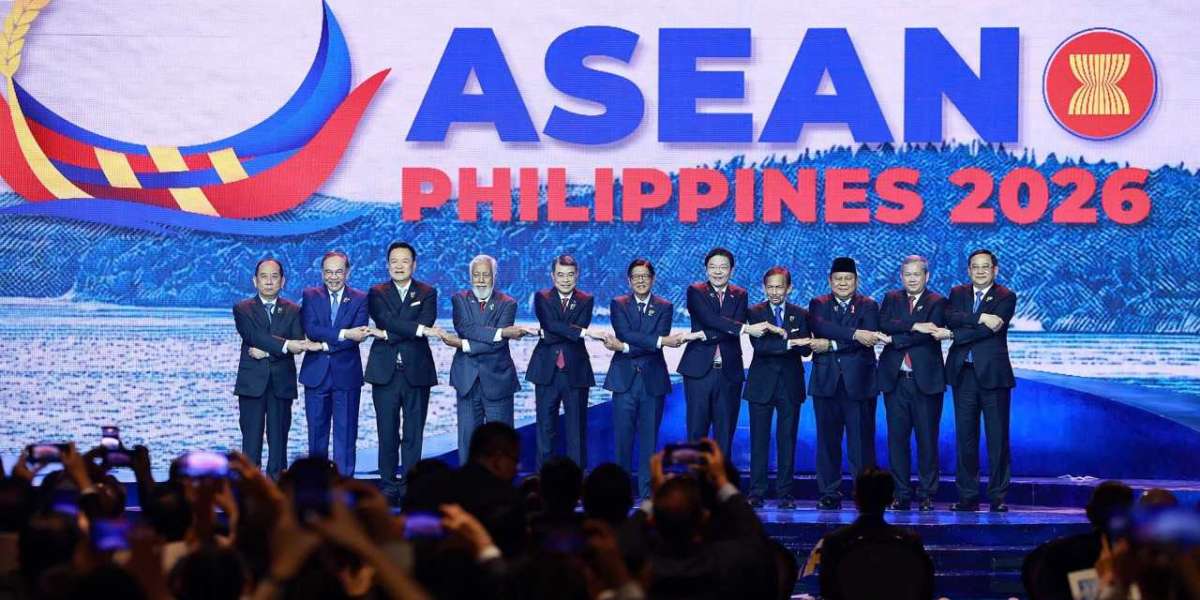

The recent ASEAN summit in Cebu has highlighted both the ambitions and the limitations of Philippines as chair of Association of Southeast Asian Nations. While Manila hoped to present itself as a unifying regional voice during a period of rising geopolitical tension and economic uncertainty, the summit instead exposed the growing difficulty of building consensus within an increasingly divided Southeast Asia.
From disputes in the South China Sea to economic fragmentation and regional security concerns, the Cebu gathering demonstrated how ASEAN’s internal divisions are limiting the effectiveness of its collective diplomacy.
The broader debate surrounding the ASEAN Cebu Summit reflects a deeper question facing the region: can ASEAN still function as a unified strategic bloc in an era of intensifying global competition?
The Philippines Sought to Strengthen ASEAN Unity
As ASEAN chair, the Philippines attempted to position itself as a mediator capable of balancing economic cooperation, regional stability, and diplomatic neutrality. Manila emphasized themes of regional resilience, economic integration, and maritime security throughout the summit discussions.
However, the growing complexity of regional challenges quickly exposed the limits of the Philippines ASEAN chairship.
Member states continue holding sharply different positions on major geopolitical issues, particularly regarding China, regional security partnerships, and economic alignment with global powers.
This lack of strategic unity has increasingly complicated ASEAN’s ability to present coordinated responses to regional crises.
South China Sea Tensions Dominated Discussions
One of the most sensitive issues during the summit remained the South China Sea dispute, where tensions between China and several Southeast Asian claimants continue escalating.
The Philippines pushed for stronger discussions on maritime security and regional sovereignty concerns, but some ASEAN members preferred more cautious diplomatic language to avoid confrontation with Beijing.
The continuing South China Sea tensions revealed how economic dependence on China continues shaping ASEAN diplomacy.
Several governments remain reluctant to support stronger collective positions that could affect trade relationships or investment flows tied to Beijing.
As a result, ASEAN once again struggled to project a unified security strategy.
ASEAN’s Consensus Model Is Facing Pressure
ASEAN’s long-standing consensus-based decision-making system has historically helped preserve regional stability by avoiding open confrontation between member states.
However, the Cebu summit showed that this model may be becoming less effective as geopolitical divisions deepen across Southeast Asia.
The growing debate over ASEAN consensus politics reflects frustration among observers who believe the organization reacts too slowly to urgent security and economic challenges.
Critics argue that ASEAN’s emphasis on neutrality and non-interference sometimes weakens its ability to address regional crises decisively.
Supporters, however, maintain that consensus remains necessary for preserving regional cohesion among politically diverse member states.
Economic Concerns Added More Complexity
Beyond security issues, the summit also focused heavily on economic uncertainty, supply chain resilience, inflation concerns, and digital transformation.
Southeast Asian economies are increasingly caught between competing global economic blocs while simultaneously facing domestic pressure related to rising living costs and slowing global trade.
The growing economic challenges facing ASEAN are making regional coordination more difficult as governments prioritize national economic stability over broader collective initiatives.
Differences in development levels, trade dependencies, and investment priorities continue complicating economic integration efforts within ASEAN itself.
The Philippines Faces Domestic and Regional Pressures
The Philippines entered its ASEAN chairship while also dealing with major domestic political and economic pressures. Rising security tensions, infrastructure demands, inflation concerns, and geopolitical balancing have all shaped Manila’s regional approach.
These pressures limited the government’s ability to fully dominate the regional diplomatic agenda during the Cebu summit.
The broader Philippines foreign policy strategy increasingly reflects the challenge of balancing closer security ties with Western allies while maintaining economic relationships with China and neighboring ASEAN states.
This balancing act mirrors the wider strategic dilemma facing much of Southeast Asia.
ASEAN’s Neutrality Is Becoming Harder to Maintain
As competition between the United States and China intensifies, ASEAN governments are facing increasing pressure to align more clearly on security and economic issues.
The Cebu summit demonstrated how difficult it has become for ASEAN to maintain strict neutrality while regional tensions continue rising.
The evolving Indo-Pacific geopolitical competition is forcing Southeast Asian countries to make increasingly complex strategic calculations involving trade, defense, and diplomacy.
This pressure is gradually testing ASEAN’s traditional model of strategic balance.
Public Expectations for ASEAN Are Changing
Younger populations across Southeast Asia increasingly expect ASEAN to play a more active role in addressing regional problems, including economic inequality, climate risks, migration, cybersecurity, and security tensions.
However, the organization’s slow-moving diplomatic structure often struggles to meet rising public expectations.
The growing conversation around reflects broader concerns about whether the bloc can adapt quickly enough to modern geopolitical and economic realities.
Without stronger coordination mechanisms, ASEAN may continue facing criticism over its limited influence during major regional crises.