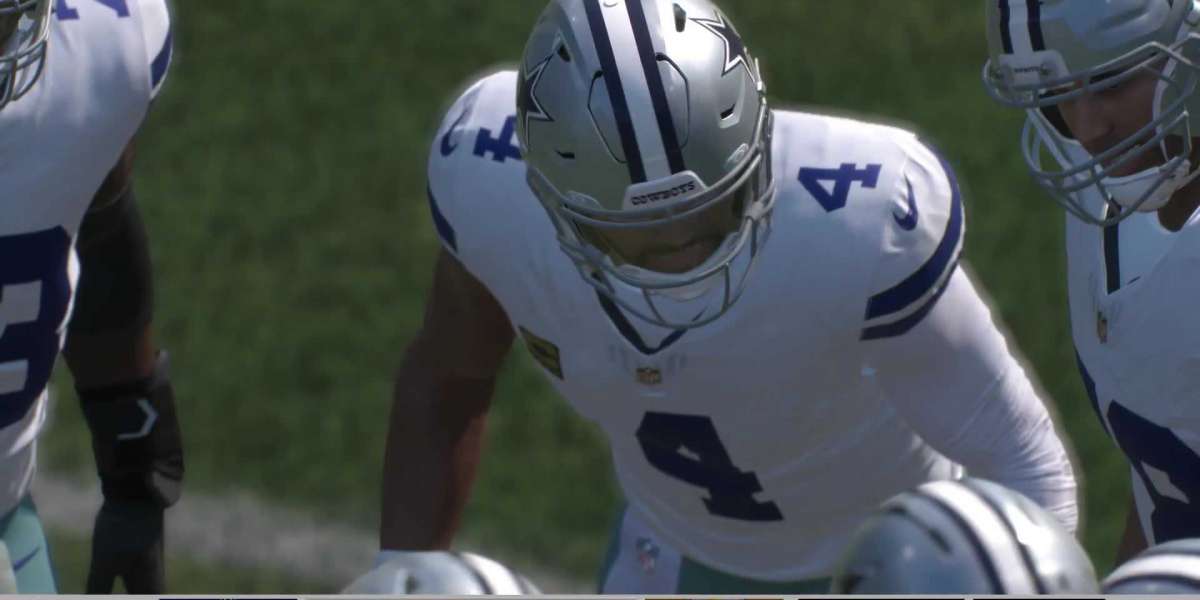

For years, football video games have existed somewhere between arcade entertainment and serious simulation. Players could often succeed through quick reflexes, familiar exploits, and a handful of highly effective plays. Madden NFL 27 takes a dramatically different approach. Based on the features described for this edition, the game puts football intelligence at the center of the experience, rewarding players who understand formations, leverage, blocking assignments, defensive rotations, and situational football.
The biggest change is the game's commitment to tactical realism. Rather than allowing every possession to become a race between the fastest players on the field, makes every snap feel like a strategic decision. Offenses must identify defensive tendencies, manipulate coverage, establish blocking angles, and understand how pressure is developing. Defenses, meanwhile, have more tools to disguise their intentions and respond to offensive formations.
This transformation begins in the trenches. The offensive and defensive lines have reportedly been rebuilt around more authentic football mechanics. Linemen now engage with greater attention to leverage, hand placement, and pass-rushing technique. Defensive ends can use swim moves, rips, and bull rushes, while offensive linemen can communicate and pass off rushers during stunts.
That means the pocket is no longer simply a safe space that appears automatically after the snap. Quarterbacks must understand where pressure is likely to originate. Dropping too deeply can actually create problems because it gives edge rushers more room to attack. Stepping forward at the correct moment becomes essential.
The new short-yardage mechanics add another layer of tension. Third-and-one or fourth-and-inches situations are no longer treated as routine moments. The QB Sneak Meter gives users greater control over the timing and physical execution of quarterback sneaks and push formations. When an offense attempts a tush push, coordination becomes critical. The offensive line needs to generate movement while the defense attempts to anticipate the direction and resist the push.
These moments can completely change the emotional rhythm of a game. A successful conversion can extend a decisive drive, while a failed attempt can hand momentum to the opponent.
The defensive side of the ball is arguably even more important. Defensive AI is designed around concepts such as leverage, passing lanes, route combinations, and pre-snap positioning. Instead of simply reacting once the football is thrown, defenders can respond to what they see developing.
Custom Adjustments further expand the defensive coordinator's responsibilities. Players can establish specific instructions for their secondary before the snap, including double teams, hard flats, and safety rotations. This makes repetitive offensive formations much easier to challenge.
For example, if an opponent repeatedly attacks the same area of the field with crossing routes, the defense can alter its coverage structure before the next snap. The game therefore becomes a continuous conversation between offense and defense. Every successful adjustment can create a counter-adjustment from the other side.
The receiving game also introduces greater precision. Wide receivers and defensive backs can physically compete throughout the route, fighting for leverage and positioning. Timing-Based Catching gives offensive players another skill-based mechanic. Instead of simply pressing a button and waiting for an animation, the player must coordinate the catch input with the arrival of the football.
Defenders have their own opportunity to influence the outcome. The revamped Tackle Stick provides more precise tackling and impact-hit opportunities, particularly against quarterbacks and ball carriers attempting difficult plays in traffic.
Another major philosophical change is the elimination of unrealistic movement exploits. The removal of speed boosting is especially important because it prevents highly agile players from instantly reaching top speed after cutting. Without that mechanic, pursuit angles matter again.
That philosophy extends throughout the game. Winning is less about finding a single unstoppable play and more about constructing a successful offensive sequence. A good player may use play-action to freeze a safety, establish the running game to create favorable passing situations, and then attack the resulting defensive weakness.
This is where Madden NFL 27 becomes particularly interesting for football enthusiasts. The game appears designed to reward preparation rather than button mashing. Players who study tendencies and understand football concepts should have a meaningful advantage over opponents who rely purely on athleticism.
For players building competitive teams, understanding the game's tactical environment may also be more important than simply focusing on acquiring the most powerful roster. Even when managing MUT resources, including decisions around , strategic team construction and player usage can matter just as much as individual ratings.
Ultimately, Madden NFL 27 represents a move toward football as a thinking person's game. Every formation has an answer, every coverage creates an opportunity, and every offensive decision can carry consequences. The result is a version of Madden that asks players to stop searching for shortcuts and start thinking like coaches.